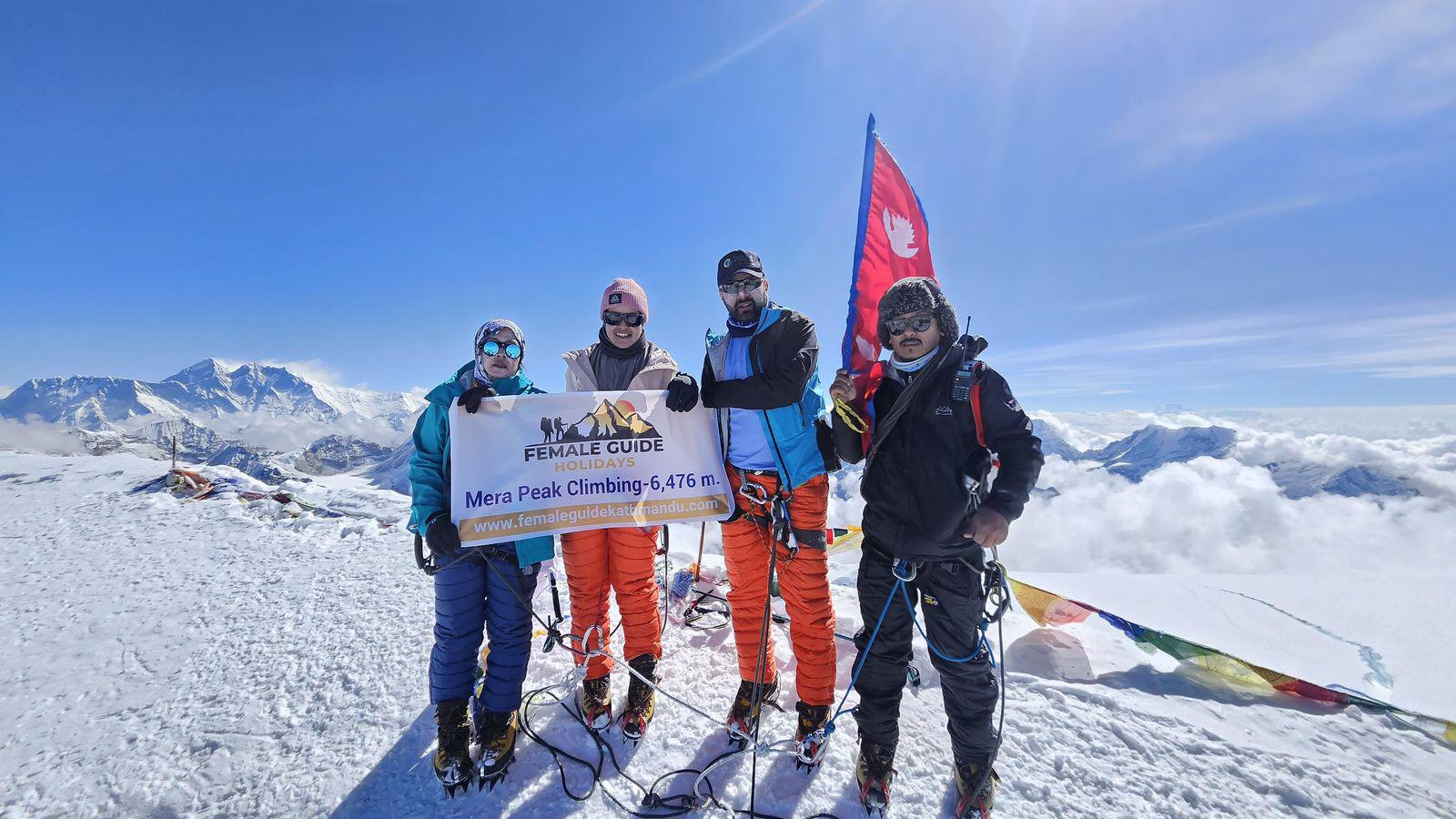
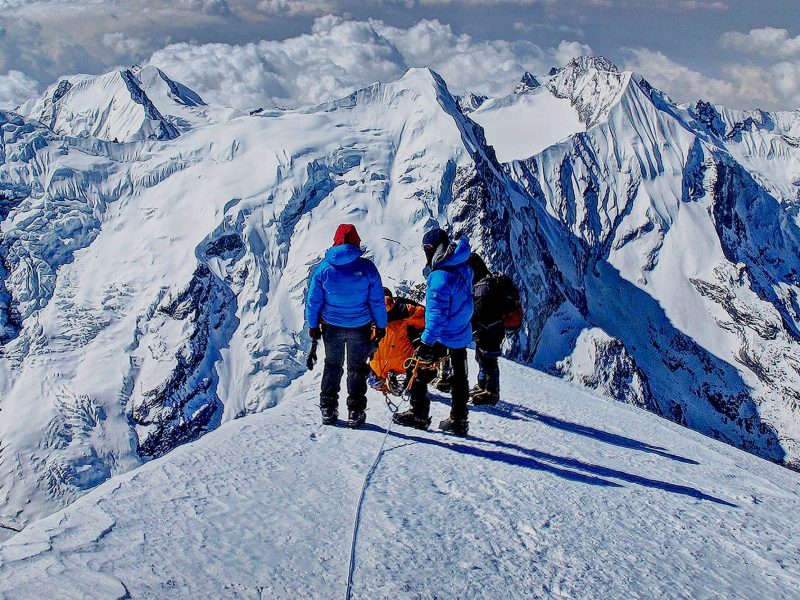
Mera Peak Climbing is one of the most rewarding and achievable high-altitude climbing adventures in Nepal, perfect for beginner climbers as well as seasoned mountaineers. Standing at an elevation of 6,461 meters, Mera Peak Central offers stunning views of five of the world’s highest mountains—Everest, Kanchenjunga, Lhotse, Makalu, and Cho Oyu—along with numerous other snowcapped Himalayan giants. This 18-day journey through the remote Hinku Valley not only provides a true Himalayan wilderness experience but also introduces climbers to Nepal’s rich alpine culture, pristine landscapes, and diverse ecosystems.
Located in the Khumbu region, southeast of Mount Everest, Mera Peak features three summits: Mera North (6,476m), Mera Central (6,461m), and Mera South (6,065m). The expedition targets Mera Central, a technically straightforward climb that doesn’t require advanced mountaineering skills, making it an ideal choice for those seeking their first Himalayan summit. Although physically demanding due to altitude and duration, the climb is classified as non-technical and includes a guided acclimatization schedule and pre-climb training.
The journey begins with a scenic mountain flight from Kathmandu to Lukla—home to one of the world’s most thrilling airstrips. From Lukla, the trail leads southward through Paiya, Panggom, and into the secluded Hinku Valley, passing over high-altitude passes like Chutok La, Khari La, and Pankongma La. Along the way, trekkers are treated to breathtaking views of the Dudh Koshi Valley, dense forests, and traditional Sherpa villages that have remained unchanged for generations.
As the route progresses through Ramailo Danda, trekkers get their first views of Mera Peak, as well as Kongde, Manju Peak, and the striking Numbur Himal. The trail then winds into the untouched wilderness of Makalu Barun National Park—one of the most biodiverse regions in Nepal. This park is the only protected area in the world that hosts both tropical forests and high Himalayan peaks. It is home to rare wildlife like the red panda, snow leopard, Himalayan Tahr, and musk deer.
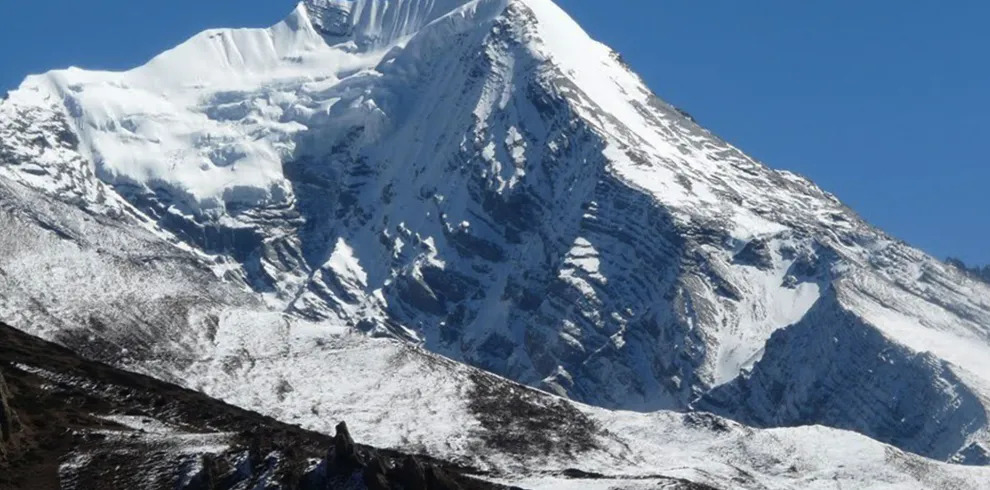
From Chhatra Khola, the trail continues to Kothe and then along the western side of the Hinku Valley toward Thuli Kharka and Khare. Khare serves as the base camp for Mera Peak and offers dramatic views of its north face. A day is set aside here for acclimatization and pre-climb instruction to ensure safety and build confidence. From Khare, the trail ascends through glacial moraines and rocky ridgelines to reach Mera High Camp. Here, you’ll be rewarded with awe-inspiring panoramas of Everest (8,848m), Kanchenjunga (8,586m), Lhotse (8,516m), Cho Oyu (8,188m), and Makalu (8,485m), along with other remarkable peaks like Baruntse, Chamlang, and Gaurishanker.
Summit day is the most thrilling part of the expedition. After an early morning alpine start, climbers ascend to the summit of Mera Peak Central and witness a 360-degree view of the majestic Himalayan range—an unforgettable experience. Following the successful climb, the descent begins through Khare and retraces the route back to Lukla, passing through lush forests, yak pastures, and small hillside settlements. Finally, a scenic flight brings you back to Kathmandu, concluding this epic adventure.
Mera Peak climbing is a perfect climbing peak, for all adventure lovers. Be a part of this thrilling experience with your travel partner Female Guide Kathmandu.
Why Choose Mera Peak Climbing?
- Perfect introduction to Himalayan peak climbing
- Non-technical ascent ideal for beginners and intermediate climbers
- Rare panoramic views of five 8,000-meter peaks
- Off-the-beaten-path trekking through remote Hinku Valley
- Diverse landscapes—from lush forests to alpine glaciers
- Cultural immersion in Sherpa villages and Buddhist heritage
Mera Peak Climbing is not just a trek—it’s a life-changing journey filled with challenge, achievement, and unforgettable Himalayan beauty. Join this incredible 18-day climbing adventure with Female Guide Kathmandu and take your first step into the world of Himalayan mountaineering with confidence and care.
Best Time for Climbing Mera Peak
The best time to climb Mera Peak is during the spring (March to May) and autumn (September to November) seasons. These months offer stable weather conditions, clear skies, and moderate temperatures, making for ideal climbing experiences. In spring, the trails bloom with rhododendrons, and the mountains are stunningly visible, while autumn provides crisp air and dry trails following the monsoon. Although it’s possible to climb Mera Peak during the winter (December to February) and summer/monsoon (June to August), these seasons come with significant challenges. Winter can be extremely cold with deep snow at higher elevations, while summer brings heavy rain and landslides, affecting visibility and trail conditions. For safety, comfort, and the best mountain views, spring and autumn are highly recommended.
Difficulty Level
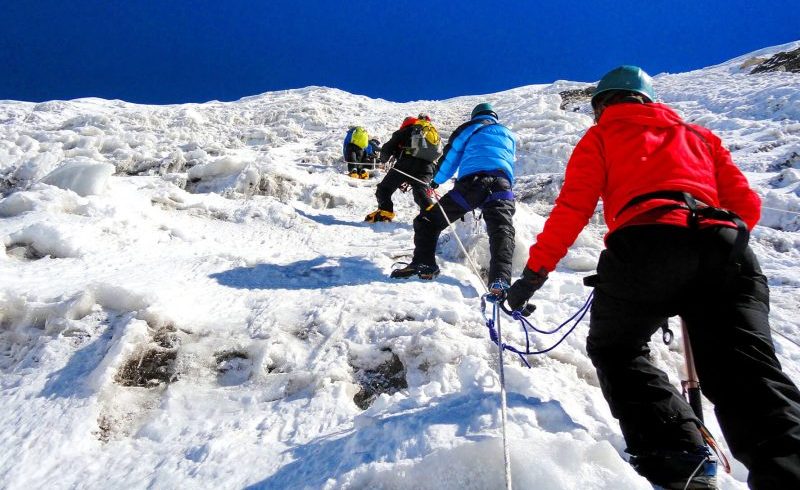
Mera Peak is considered a strenuous yet non-technical trekking peak, making it suitable for those with good physical conditioning and some high-altitude trekking experience. The ascent involves glacier walking, crevasses, and moderate climbing on snow slopes, but it does not require technical mountaineering skills like rock or ice climbing. The biggest challenge lies in the high altitude, cold temperatures, and the extended trekking duration of nearly three weeks. With a proper acclimatization schedule, guided support, and pre-climb training, climbers can confidently make the summit. The route is long and demanding but manageable for determined trekkers looking to push their limits.
Physical Fitness and Requirements
Climbing Mera Peak requires a high level of physical fitness, endurance, and mental preparation. Participants should be comfortable walking 6–8 hours per day on mountainous terrain, often at high altitudes above 4,000 meters. Cardiovascular strength, leg muscle endurance, and core stability are essential for managing steep ascents and descents. While prior climbing experience is not mandatory, previous trekking experience at high altitude is strongly recommended. Training should begin at least 2–3 months in advance and include aerobic workouts, strength training, hiking with a loaded backpack, and altitude adaptation if possible. Mental resilience is equally important to handle the physical and environmental challenges along the way.
Altitude Sickness and Preparation
Altitude sickness is a real concern when climbing Mera Peak due to the elevation gain, with the summit standing at 6,461 meters. The risk increases when ascending too quickly or without proper acclimatization. Common symptoms include headaches, fatigue, shortness of breath, nausea, and dizziness. To minimize the risk, the itinerary includes gradual ascents, rest days, and acclimatization hikes. Hydration, avoiding alcohol and smoking, and maintaining a slow, steady pace are critical. Climbers should be familiar with the symptoms of Acute Mountain Sickness (AMS) and be prepared with medications like acetazolamide (Diamox), if advised by a doctor. Proper acclimatization is key to a safe and successful climb.
High-Altitude Weather Conditions
Weather in high-altitude regions like Mera Peak can be unpredictable and extreme. Even during the best seasons, conditions can change rapidly, with the possibility of snowfall, windstorms, and temperature drops. Temperatures at high camp and near the summit can fall below -15°C (5°F), especially during the early morning hours of the summit push. Wind chill can make conditions even more severe. It’s essential to have proper high-altitude clothing and gear, including layered insulation, waterproof outerwear, glacier glasses, and thermal gloves. A detailed gear checklist should be followed, and climbers must be prepared to adapt their schedule based on weather forecasts provided by the guiding team.
Mera Peak Climbing Permit
To climb Mera Peak, a special climbing permit is required from the Nepal Mountaineering Association (NMA). The cost of this permit varies by season. During the spring season (March to May), which is considered the prime climbing season, the fee is USD 250. In the autumn season (September to November), the cost is USD 125. For climbs in the summer/monsoon (June to August) or winter (December to February), the permit fee is USD 70. This permit is mandatory and must be carried throughout the expedition.
Makalu Barun National Park Entry Permit
Since part of the Mera Peak trail passes through Makalu Barun National Park, trekkers and climbers are required to obtain the Makalu Barun National Park entry permit. This permit helps support conservation efforts and maintain the pristine environment of the park, which is known for its rare wildlife and diverse vegetation. The permit can be obtained in Kathmandu or at the entry checkpoint on the trail.
Khumbu Pasang Lhamu Rural Municipality Permit
In addition to the park and climbing permits, all trekkers entering the Khumbu region must acquire the Khumbu Pasang Lhamu Rural Municipality permit. This local government fee helps support development and infrastructure in the region. It replaces the traditional TIMS card for this area and is compulsory for all trekkers, including those heading toward Mera Peak.
Permit Arrangement
All necessary permits for Mera Peak climbing, including the climbing permit, national park entry, and rural municipality fee, are typically arranged in advance by your registered trekking agency or local guide. This ensures a smooth, legal, and stress-free experience as you begin your high-altitude adventure in the Himalayas.
Accommodation – Camping and High-Altitude Tented Camps
During the initial stages of the Mera Peak expedition, accommodation is provided in local teahouses found in lower-altitude villages such as Paiya, Panggom, and Kothe. These teahouses offer basic yet comfortable lodging, typically featuring twin-sharing rooms, warm bedding, and hearty Nepali meals. While the facilities are modest, they provide a cozy and authentic experience of Himalayan hospitality, allowing trekkers to rest and refuel after long days on the trail.
As the route climbs beyond Khare toward Mera High Camp, the accommodation shifts to high-altitude tented camps. These camps are fully equipped and set up by the climbing support crew to ensure safety and comfort at extreme elevations. The tents are built to endure harsh alpine conditions and include insulated sleeping mats, warm sleeping bags, and wind-resistant covers. All necessary camping gear is carried by the team, allowing climbers to focus entirely on their ascent without worrying about logistics or setup.
Meals on the Trail
Nutritious and well-prepared meals are essential for a successful climb. Throughout the trek, teahouses offer locally prepared, hygienic meals including staples like dal bhat (rice, lentils, and vegetables), noodles, pasta, soups, and Tibetan bread. During the camping phase at higher elevations, the expedition cook prepares high-calorie meals tailored to meet the nutritional needs of climbers in cold, high-altitude environments. Hot tea, coffee, and energy-boosting snacks are provided regularly to maintain hydration and stamina. Special dietary requirements can be accommodated upon request if informed in advance.
Drinking Water
Access to clean and safe drinking water is a priority during the Mera Peak climb. In teahouse regions, boiled or filtered drinking water is available for purchase or can be treated using purification tablets or portable filters. At higher elevations and camps, the expedition team ensures water is boiled and sterilized before consumption. Carrying a refillable water bottle or hydration bladder is recommended, and staying well-hydrated is essential for acclimatization and overall health.
Guide and Porter Support
Your journey to Mera Peak is led by a professional female climbing and trekking guide, experienced in high-altitude expeditions and well-trained in first aid, rescue protocols, and terrain navigation. Alongside her, a dedicated team of porters carries the necessary equipment, tents, and gear, allowing you to focus on the climb. Choosing a female-led team offers a safe, empowering, and inclusive environment for all trekkers, especially women. All staff are insured, fairly paid, and treated ethically, contributing to responsible tourism in Nepal.
Wi-Fi and Electricity
In lower-altitude villages and teahouses, Wi-Fi and electricity are available, usually for an additional cost. Connectivity becomes limited as the trail gains elevation. Charging devices such as phones and cameras is possible at teahouses using solar or generator-powered outlets. At higher camps, electricity is not guaranteed, so it’s advisable to carry power banks and solar chargers. While digital detox is often a part of the experience, some locations may have limited satellite internet access provided by the trekking company for emergency communication.
Travel Insurance
Travel insurance is mandatory for anyone attempting Mera Peak. It should include coverage for high-altitude trekking and climbing (up to 6,500 meters), emergency helicopter evacuation, trip cancellation, medical treatment, and personal liability. Be sure to check the policy details and ensure your insurer covers activities classified as mountaineering or alpine trekking. Proof of insurance is often required before the expedition begins, and it serves as a critical safety net in the event of altitude sickness, injury, or unforeseen emergencies.
Passport and Visa Requirements
To enter Nepal, all international travelers must possess a valid passport with at least six months’ validity. A tourist visa can be obtained upon arrival at Tribhuvan International Airport in Kathmandu or online through Nepal’s official immigration website. The visa is typically valid for 15, 30, or 90 days, depending on your preference. Ensure your passport contains blank pages for stamps and entry/exit records. It’s also recommended to keep a few passport-sized photos and a copy of your travel insurance and itinerary in case of permit processing needs.
Safety and Security
Safety is the top priority throughout the Mera Peak expedition. The route is carefully planned to allow for gradual acclimatization, with adequate rest days and emergency contingency measures in place. The guides are certified in wilderness first aid, and the team carries a first aid kit, pulse oximeter, and satellite phone for communication. The use of experienced climbing Sherpas and strict adherence to weather and health assessments ensures that every step taken is secure. Additionally, personal belongings are watched over by trusted staff, and porters are trained to handle equipment responsibly.
Weather Forecast and Monitoring
Climbing Mera Peak requires constant monitoring of high-altitude weather patterns, especially as the summit push approaches. The expedition team uses satellite-based forecasting tools to track storm systems, wind speeds, and temperature shifts. Guides make informed decisions based on current weather data to ensure the safety of the team. If adverse weather is predicted, summit attempts may be postponed or rescheduled, prioritizing health and success over risk. Weather changes are rapid at altitudes above 5,000 meters, so flexibility and preparedness are essential components of the climb.
Comprehensive Guiding Services
Your climbing experience is supported by comprehensive guiding services, including logistical planning, route management, permit arrangement, and technical instruction. From arrival in Kathmandu to the final summit bid and return, the guiding team handles all aspects of the expedition. This includes pre-climb briefings, equipment checks, safety training, acclimatization guidance, and motivation throughout the journey. Whether you’re a first-time climber or an experienced trekker, having a skilled team ensures clarity, confidence, and care at every stage.
Team Composition
The Mera Peak climbing team typically consists of a female climbing guide, assistant guides, porters, a high-altitude cook, and a camp support crew. The size of the team depends on the group size, but the ratio of support staff to trekkers is kept high to ensure personalized attention and efficient service. Porters carry a maximum of 20–25 kg each, adhering to ethical load limits. The guide-to-client ratio remains low for safety, and the staff is trained to assist in all weather and altitude conditions. Team harmony, communication, and shared purpose define the overall success of the expedition.
Essential Gear and Packing List for Mera Peak Climbing
Preparing the right gear is crucial for a safe and successful Mera Peak climbing expedition. The mountain’s high altitude and changing weather conditions demand durable, warm, and reliable equipment. This list covers all the necessary items to keep you comfortable, protected, and ready for the climb.
Clothing
- Base Layers: Lightweight, moisture-wicking thermal tops and bottoms to keep you dry and warm.
- Insulation Layers: Fleece or down jacket for warmth during cold nights and summit day.
- Outer Shell: Waterproof and windproof jacket and pants to protect against rain, wind, and snow.
- Trekking Clothes: Breathable trekking pants and shirts suitable for layering and quick drying.
- Gloves: Insulated gloves for cold weather and lighter gloves for trekking.
- Hat & Buff: Warm hat for cold, plus a sun hat or buff for sun protection.
- Socks: Wool or synthetic socks, including warm pairs for high altitude.
- Gaiters: Protect boots and legs from snow and debris.
Footwear
- Trekking Boots: Waterproof, sturdy boots with ankle support, well broken-in for comfort.
- Mountaineering Boots: Insulated boots designed for summit climbing (rent locally if needed).
- Camp Shoes: Comfortable sandals or lightweight shoes for evenings.
Climbing Equipment
(Usually provided or rented, but confirm beforehand)
- Climbing harness
- Helmet
- Ice axe
- Crampons (compatible with climbing boots)
- Ascenders, carabiners, and rappel devices
- Climbing ropes (provided by guides)
Backpack and Carrying Gear
- Daypack: 30-40L for essentials and summit day gear.
- Duffel Bag: Large, waterproof bag for main equipment carried by porters or yaks.
- Sleeping Bag: Rated to at least -15°C for cold high-altitude nights.
- Sleeping Pad: Insulated pad for warmth and comfort in tents.
Hydration and Nutrition
- Water bottles (minimum 2 liters) and insulated thermos for hot drinks.
- Water purification tablets or filter to ensure safe drinking water.
- Energy bars and snacks for extra calories on long trekking days.
Accessories and Essentials
- Headlamp with spare batteries for nighttime visibility.
- Sunglasses with strong UV protection to prevent snow blindness.
- High SPF sunscreen and lip balm to protect skin from intense sun.
- Trekking poles for balance and reducing joint strain.
Electronics
- Mobile phone and charger
- Camera with charger or extra batteries (optional but recommended for photography lovers)
- Universal power adapter (Nepal uses Type C, D, and M plugs; voltage: 230V, 50Hz)
- Power bank for charging on the go
Optional Items
- Travel guidebook or journal
- Umbrella or lightweight travel poncho
- Binoculars for mountain or wildlife viewing (especially in Shivapuri)
- Small snacks or energy bars for day trips
- Book, e-reader, or entertainment for leisure time
Personal Items
- Passport, climbing permits, and travel insurance documents.
- Personal medications and a basic first aid kit.
- Toiletries including biodegradable soap, toothbrush, toothpaste, and quick-dry towel.
- Camera and chargers or power banks.
- Cash in small denominations for tips or small purchases.
Packing these essentials ensures you are well-prepared for the physical challenges and unpredictable conditions of Mera Peak climbing. Always check with your trekking agency for any specific recommendations or gear rental options.
Final Notes
Before starting your Mera Peak climbing expedition, it is vital to ensure all your travel preparations are complete for a safe and enjoyable journey. Although this climb involves some challenging trekking at high altitude, packing the right clothing and gear suited for varying mountain weather is essential. Comfortable trekking boots, layered clothing, and weather-appropriate accessories such as gloves, hats, and sun protection will help you stay comfortable throughout the trek. We recommend testing your gear and clothing prior to departure to prevent discomfort or equipment issues during the climb.
At Female Guide Holiday, we are committed to providing a smooth, safe, and memorable climbing experience. Should you have any questions or require assistance before or during your expedition, our dedicated team is always ready to support you.
Cancellation Policy
Cancellation by the Participant
If you choose to cancel your Mera Peak climbing booking, please notify Female Guide Holiday in writing (via email or official communication) as early as possible. The following cancellation fees apply based on the timing of your notice:
- 60 days or more before the expedition start date: A cancellation fee of 20% of the total cost will be retained.
- 30 to 59 days before the expedition start date: A cancellation fee of 50% of the total cost will be charged.
- Less than 30 days before the expedition start date: The entire payment is non-refundable.
These charges cover administrative fees, permits, accommodation, transport bookings, and other pre-arranged services.
Cancellation by the Organizer
In rare cases where Female Guide Holiday must cancel the Mera Peak climb due to unavoidable or uncontrollable events such as severe weather, natural disasters, or safety concerns, participants will be offered either:
- A full refund of all payments made, or
- The option to reschedule the expedition to a later available date.
Participant safety is our highest priority, and cancellations are only made when absolutely necessary.
Force Majeure Clause
Female Guide Holiday is not responsible for cancellations, delays, or additional expenses caused by force majeure events, including but not limited to:
- Natural disasters such as earthquakes, floods, or landslides
- Political unrest, border closures, or government restrictions
- Health emergencies, epidemics, or pandemics
- Airline cancellations, airspace closures, or transport strikes
In such circumstances, any extra costs incurred for accommodation, flight changes, or insurance claims are the responsibility of the participant. We strongly recommend all climbers purchase comprehensive travel insurance covering trip cancellations, medical emergencies, and force majeure events before starting the expedition.
Trip Highlights
- Summit Mera Peak Central at 6,461 meters, one of Nepal’s highest trekking peaks
- Experience breathtaking views of five 8,000-meter giants: Everest, Lhotse, Makalu, Cho Oyu, and Kanchenjunga
- Ideal climbing peak for beginners seeking their first Himalayan summit or seasoned trekkers looking for a new challenge
- Trek through the remote and pristine Hinku Valley, far from the crowded trails of the Everest region
- Enjoy close-up views of Mera Peak, Baruntse, Numbur Himal, Chamlang, and other towering snow-capped peaks
- Explore the diverse landscapes of Makalu Barun National Park, home to rare wildlife and unique alpine ecosystems
- Stay in traditional teahouses and experience the warm hospitality of the local Sherpa communities
- Fly to and from Lukla, enjoying scenic Himalayan views and thrilling mountain airstrips
- Acclimatize properly with rest days and pre-climb training for a safer and more confident ascent
- Cross high-altitude passes including Chutok La, Khari La, and Pankongma La with panoramic views