

Menu

24/7 Support
Need help? We are at your service
- 977 9843197098
- [email protected]
- Thamel, Kathmandu, Nepal
Useful links

We are affiliated with:


We are reccommended in:


We accept:

Menu
24/7 Support
Need help? We are at your service
Useful links
We are affiliated with:
We are reccommended in:
We accept:
Duration
11 Days
Altitude
4130 meters/ 13549 feet
Accommodation
Hotel and Tea House
Meals
B, L, D
Group Size
Min. 1 Pax
Activities
Trekking
Difficulty
Moderate
Best Time
March-April-May August- September-October
The Annapurna Base Camp Trek – 11 Days is one of Nepal's most rewarding Himalayan trekking adventures, combining spectacular mountain scenery, traditional villages, lush forests, and rich local culture. Organized by Female Guide Holiday, this trek takes you into the heart of the Annapurna Sanctuary, a natural mountain amphitheatre surrounded by towering Himalayan peaks.
The journey leads through charming Gurung and Magar villages, terraced farmlands, rhododendron forests, bamboo groves, cascading waterfalls, and dramatic river valleys. As you gradually gain altitude, the landscape changes from green subtropical forests to alpine terrain, offering increasingly impressive views of the Annapurna mountain range.
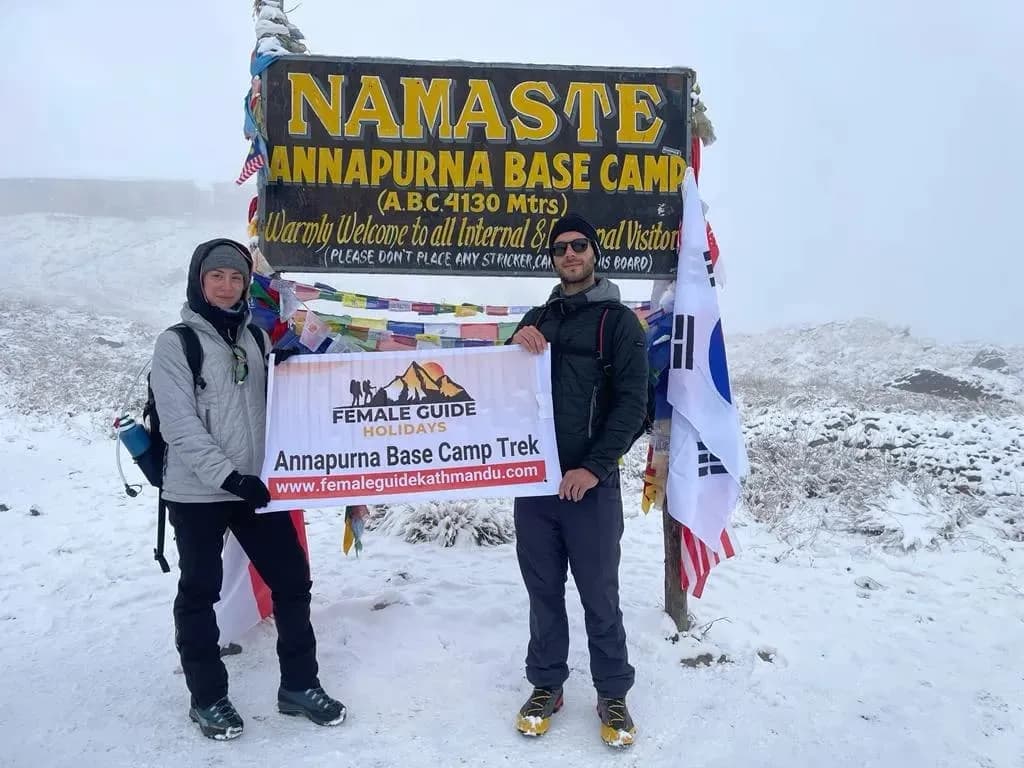
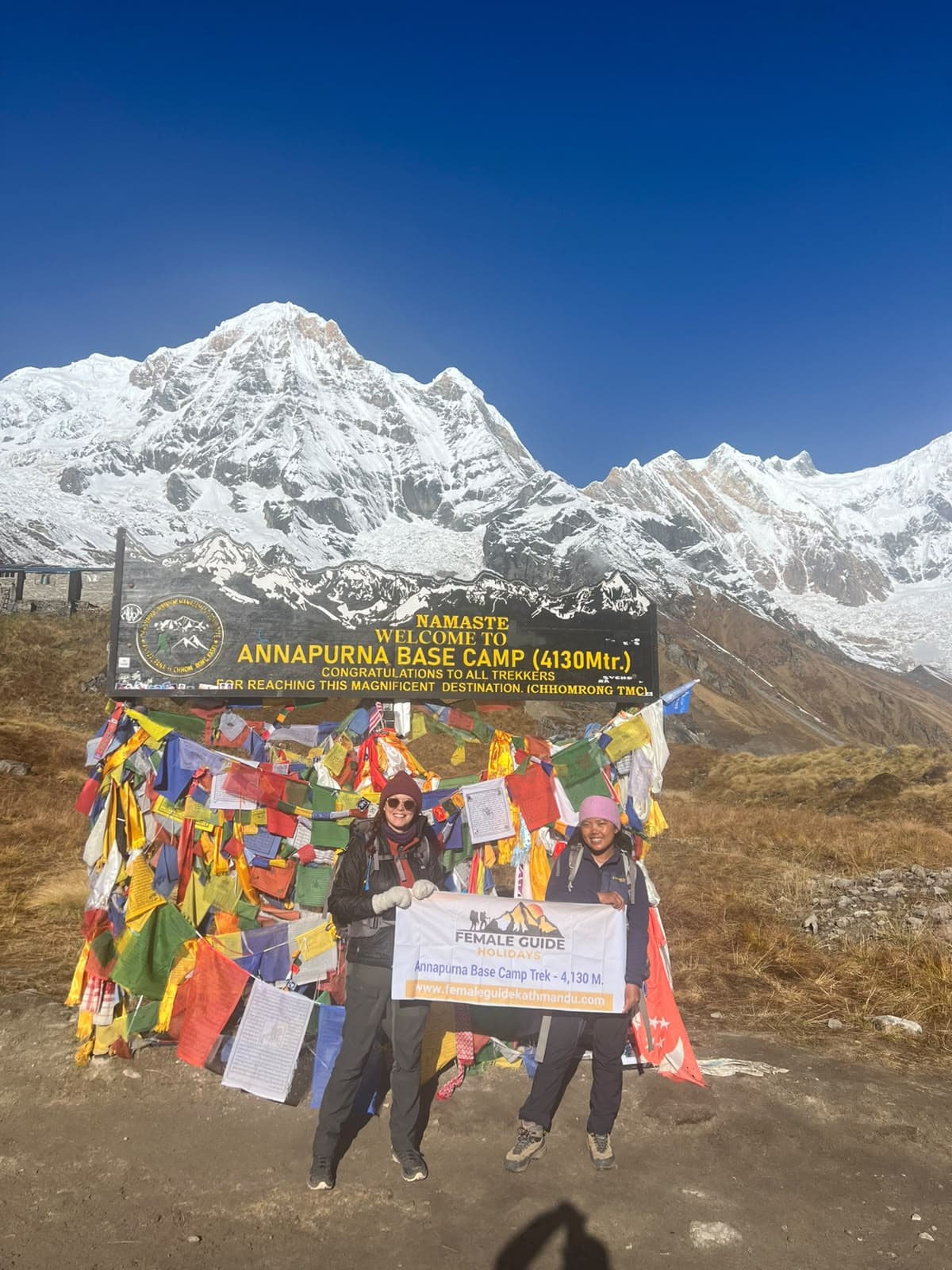
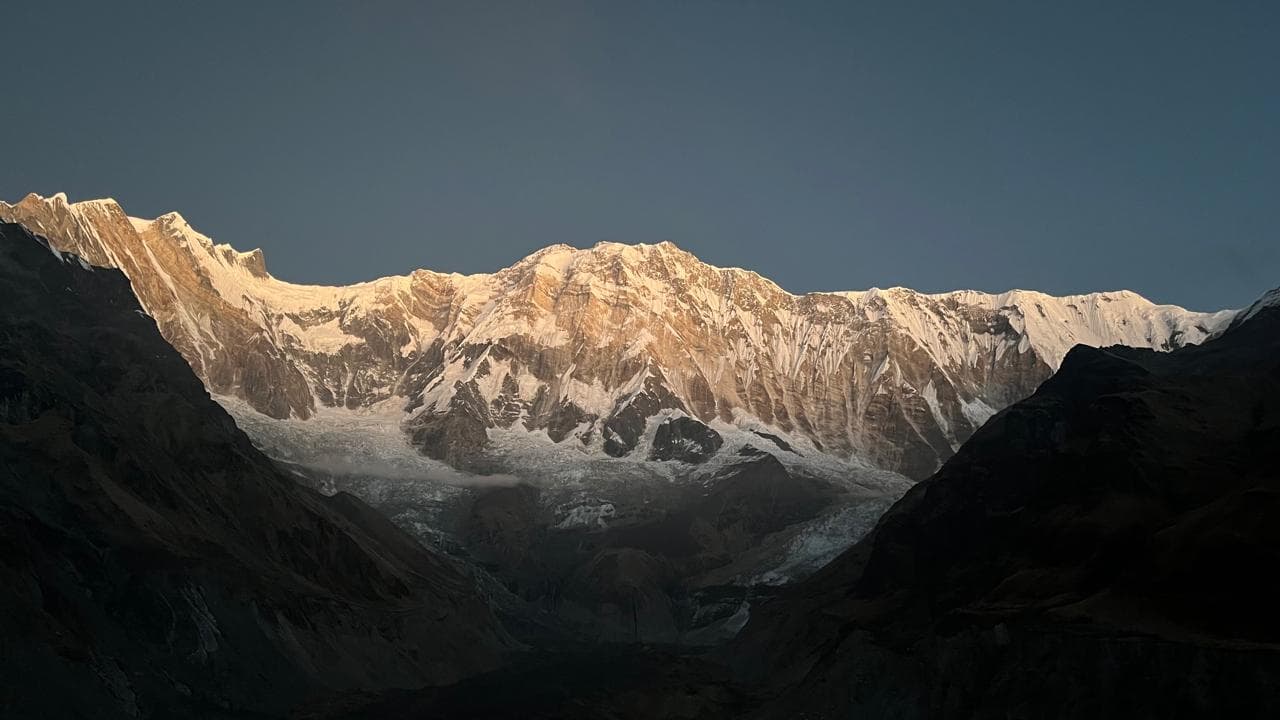
The major highlight is reaching Annapurna Base Camp at approximately 4,130 m (13,550 ft), where you are surrounded by magnificent Himalayan peaks, including Annapurna I (8,091 m), Annapurna South, Hiunchuli, and Machhapuchhre (Fishtail). Along the way, you will pass Machhapuchhre Base Camp, enjoy mountain panoramas, experience traditional teahouse hospitality, and have the opportunity to relax in natural hot springs near Jhinu Danda if your itinerary permits.
Unlike some longer Himalayan expeditions, the Annapurna Base Camp Trek offers an accessible way to experience high-mountain scenery without technical climbing. However, the route includes steep stone staircases, daily ascents and descents, and high-altitude walking, so a reasonable level of fitness and proper preparation are important.
Spring and autumn are generally the most popular seasons for this trek because of their favourable walking conditions and mountain views. With experienced trekking support, suitable accommodation, and careful attention to altitude, the 11-day Annapurna Base Camp Trek is an excellent choice for travellers seeking Himalayan adventure, cultural encounters, and unforgettable mountain landscapes.
Female Guide Holiday will help arrange trekking guides, porters, accommodation, permits, transportation, and other essential services to make your journey more comfortable and organized.
The Annapurna Base Camp Trek can be undertaken in different seasons, but spring and autumn are generally considered the best times for comfortable trekking and mountain views.
Spring is one of the most popular seasons for the Annapurna Base Camp Trek. The weather is generally favourable, forests become colourful with blooming rhododendrons, and the trails offer beautiful views of the surrounding hills and mountains. Temperatures become warmer at lower elevations, although nights remain cold at higher altitudes.
Autumn is another excellent season, especially for clear mountain views and generally stable trekking conditions. After the monsoon, the landscape is often green, the air can be clear, and the Annapurna range may be visible in impressive detail. October and November are particularly popular, so booking accommodation and services in advance is recommended.
Winter trekking is possible, but temperatures can drop significantly at higher elevations. Snowfall, icy trails, and cold nights may affect access to Annapurna Base Camp. Trekkers need suitable winter clothing, warm sleeping arrangements, and flexibility in their itinerary. Check current weather and trail conditions before departure.
The monsoon season brings heavy rainfall, humid conditions, slippery trails, leeches at lower elevations, and an increased risk of landslides. Clouds may also limit mountain views. Although trekking is possible during suitable weather windows, careful planning and regular weather checks are essential.
Recommended months: March, April, May, September, October, and November, subject to current weather and trail conditions.
The Annapurna Base Camp Trek is generally rated moderate to challenging. It does not require technical mountaineering skills, but trekkers should be prepared for several hours of walking each day, steep stone staircases, uneven trails, and repeated ascents and descents.
Most trekking days involve approximately 4–7 hours of walking, although actual durations depend on the route, weather, fitness, and group pace. The approach to Annapurna Base Camp involves a substantial gain in elevation, and the thinner air can make walking more demanding.
The highest overnight or trekking point is Annapurna Base Camp, at approximately 4,130 m (13,550 ft). Altitude-related illness is possible, even for fit travellers, so a gradual pace, adequate hydration, and attention to symptoms are important.
Previous trekking experience is helpful but not essential. Beginners with good fitness who prepare properly can complete the trek. Regular walking, stair climbing, hiking, and cardiovascular exercise before departure can improve comfort and endurance.
An experienced trekking guide can help you navigate the Annapurna Base Camp route, understand local culture, manage daily logistics, and respond to changing trail and weather conditions. Female Guide Holiday can arrange a qualified guide according to your group size and travel preferences.
Porters can carry your main trekking luggage, allowing you to walk with a lighter daypack containing water, snacks, extra layers, personal medication, and essential items. Porter arrangements and baggage limits should be confirmed before departure.
As a general arrangement, one porter may be shared by two trekkers, depending on the package and luggage allowance. Please pack responsibly and keep within the agreed weight limit.
Your guide will also monitor the group's pace and general well-being, explain the daily route, and advise you when conditions require adjustments. A guide's support is valuable, but trekkers should still maintain personal awareness, follow safety instructions, and report any symptoms of altitude sickness promptly.
Wi-Fi and electricity are available at many teahouses along the Annapurna Base Camp trekking route, but service quality varies by village, lodge, weather, and location. Connectivity may become less reliable as you travel farther into the Annapurna Sanctuary.
Some lodges charge additional fees for Wi-Fi, device charging, or the use of electrical outlets. Solar power and local electricity systems may be affected by cloudy weather or high demand.
Carry a power bank and the appropriate charging cables for your devices. A universal travel adapter can also be useful. If you need reliable internet for work or communication, download essential documents, maps, and contact information before leaving the cities.
The Annapurna Base Camp Trek offers excellent opportunities to photograph Himalayan peaks, forests, waterfalls, villages, and traditional mountain life. Sunrise and early morning often provide beautiful mountain views when the sky is clear.
Always ask permission before photographing local people, private homes, religious ceremonies, or activities inside monasteries and temples. Respect signs or requests prohibiting photography, and avoid disturbing wildlife or other trekkers.
Drone use in Nepal is subject to aviation regulations and may require permits or authorization from relevant authorities. Additional restrictions may apply in protected areas and near sensitive locations. Do not fly a drone without confirming the applicable requirements and obtaining all necessary permissions in advance.
Mobile network coverage is available in some villages along the Annapurna Base Camp route, but signal strength varies. Coverage may be intermittent or unavailable in remote valleys and higher sections of the trail.
A local Nepal SIM card may help you stay connected in areas with coverage. Ask your guide about the network options available for your route, and do not rely on mobile service for emergencies.
Share your itinerary and emergency contact details with family or friends before trekking. Your guide can help coordinate communication where possible, but weather and remoteness may delay contact or assistance.
Nepalese rupees (NPR) are used for payments throughout Nepal. ATMs and currency exchange services are available in Kathmandu and Pokhara, but facilities become limited once you begin trekking.
Carry sufficient cash in small denominations to cover personal expenses such as snacks, drinks, hot showers, device charging, Wi-Fi, laundry, and other services not included in your package. Prices at higher elevations are often greater because supplies must be transported along the trekking route.
Do not rely on finding an ATM during the trek. Exchange money or withdraw the cash you expect to need before leaving Pokhara, and keep it in a secure, waterproof pouch.
During the Annapurna Base Camp Trek, your main trekking luggage may be carried by porters if porter services are included in your package. A daypack is recommended for carrying drinking water, snacks, sunscreen, a rain jacket, warm layers, personal medication, and other essentials.
If you have luggage that is not required during the trek, you can usually arrange storage at your Kathmandu or Pokhara hotel, subject to the hotel's policies and available facilities.
Pack your trekking belongings in a duffel bag or suitable soft-sided bag if requested by your trekking company. Keep passports, money, electronics, medication, valuables, and essential travel documents with you rather than placing them in porter-carried luggage.
Confirm the porter weight allowance and luggage arrangements with Female Guide Holiday before departure.
Annapurna Base Camp lies at approximately 4,130 m (13,550 ft), where reduced oxygen availability can cause altitude-related symptoms. Altitude sickness can affect anyone, regardless of age, fitness, or previous trekking experience.
Common early symptoms include headache, nausea, dizziness, unusual fatigue, reduced appetite, and difficulty sleeping. Inform your guide immediately if you experience symptoms, particularly if they worsen or persist.
To reduce risks:
Your guide can help assess the situation and coordinate assistance, but trekking schedules may need to change for safety. Travel insurance that covers trekking at your planned altitude and emergency helicopter evacuation is strongly recommended.
The Annapurna Base Camp Trek passes through the Annapurna Conservation Area, which protects important mountain ecosystems, forests, wildlife, and local communities. Responsible travel helps preserve this environment for future generations.
Trekkers are encouraged to carry reusable water bottles, reduce single-use plastics, dispose of waste properly, and follow local conservation rules. Use established trails and avoid disturbing wildlife or removing plants.
Respect local customs, religious traditions, and community practices. Ask permission before taking photographs of residents, dress appropriately when visiting religious sites, and support local teahouses and businesses where possible.
Female Guide Holiday encourages travellers to minimise their environmental impact, respect local communities, and follow the guidance of their trekking team throughout the journey.
The Annapurna Base Camp Trek usually begins with travel from Kathmandu to Pokhara, followed by a road journey to the trek's starting point. The exact starting and ending locations depend on the itinerary, road conditions, and the trekking route selected.
Travellers can reach Pokhara by domestic flight or road transportation. A flight generally takes around 25–30 minutes, while a tourist bus or private vehicle takes several hours, depending on traffic and road conditions.
From Pokhara, private vehicles or other suitable road transportation take trekkers to the designated trailhead, commonly in Nayapul, Jhinu Danda, or another access area according to the itinerary. Road conditions can change, particularly during the monsoon.
After completing the trek, transportation is arranged from the designated trail exit to Pokhara. Travellers can then return to Kathmandu by flight or road, depending on the package.
Domestic flights may be delayed or cancelled due to weather or operational conditions. It is wise to allow some flexibility when arranging international departure flights.
Tipping is customary in Nepal's trekking industry, although it is voluntary and should reflect the quality of service, the length of the trek, and your satisfaction.
If you are happy with the support provided by your guide and porter, a tip can be a meaningful way to recognise their work. Consider the duration of the trek, group size, service quality, and the responsibilities involved when deciding how much to give.
Tips are not generally included in standard trekking packages unless specifically stated. It is helpful to carry some Nepalese rupees in cash so you can tip your trekking team at the end of the trip.
Although the package may include accommodation, meals, permits, guide services, and transportation, some personal expenses are usually paid separately.
Additional expenses may include:
The exact inclusions and exclusions depend on your selected package. Review the trip details before departure and carry sufficient cash for remote trekking areas.
Weather, road conditions, trail conditions, illness, natural events, and transportation disruptions may affect the Annapurna Base Camp Trek. Heavy rainfall, landslides, snowfall, or other unexpected conditions can cause delays or require changes to the planned route.
Female Guide Holiday prioritises the safety and well-being of trekkers. The guide and operations team may adjust the itinerary, walking schedule, accommodation, or transportation when necessary.
Travellers should allow flexibility in their international travel plans, particularly when taking domestic flights. Additional accommodation, meals, or transportation arising from unexpected delays may involve extra costs, depending on the circumstances and package terms.
You can book the Annapurna Base Camp Trek with Female Guide Holiday by confirming your preferred travel dates, group size, accommodation preferences, and any special requirements.
Before booking, review the itinerary, inclusions, exclusions, cancellation policy, and payment terms. Inform the company of any dietary requirements, relevant mobility concerns, or other needs that may affect your trekking arrangements.
Early booking is recommended during the popular spring and autumn seasons, when accommodation and transportation can be in high demand. Your booking is confirmed according to the company's payment terms and confirmation of the required arrangements.
Last-minute bookings may be possible for the Annapurna Base Camp Trek, depending on guide availability, accommodation, transportation, and permit requirements. However, availability cannot be guaranteed, particularly during the peak trekking seasons of spring and autumn.
If you are planning a last-minute trek, contact Female Guide Holiday with your preferred departure date, number of travellers, and accommodation preferences. The team can check the available arrangements and advise whether the trek can be organised within your timeframe.
Additional costs may apply if urgent transportation or alternative accommodation is required. Wait for confirmation of the arrangements and payment terms before making non-refundable travel commitments.
The Annapurna Base Camp Trek is suitable for solo travellers, couples, families with suitable trekking experience, and private groups. Female Guide Holiday can help arrange a trek according to your preferred travel style, schedule, and available services.
Solo travellers can book a private trek with a guide and porter services as required. The cost per person may be higher than for a group because some transportation, guide, and operational costs are shared among fewer travellers.
Groups can often share eligible costs, depending on the size of the group and the package. Private departures can also be arranged for travellers who prefer greater flexibility in walking pace, accommodation, and departure dates.
All trekkers should be comfortable with the physical demands of the route and follow the guide's safety advice throughout the journey.
Accommodation during the Annapurna Base Camp Trek generally consists of hotels in Kathmandu and Pokhara, followed by local teahouses or lodges along the trekking route. Hotel accommodation is commonly arranged on a twin-sharing basis, while teahouses in the mountains offer simpler facilities.
Rooms in trekking areas may have basic furnishings, shared bathrooms, and limited hot water or charging facilities. Availability and comfort vary by location and season, and higher-altitude lodges may have fewer amenities.
Private rooms may be available at some stops, but they cannot always be guaranteed during busy periods. Confirm your package details to understand which nights of accommodation, room arrangements, and meals are included.
Meals during the trek are generally served at local teahouses and lodges. Common options include dal bhat, rice, noodles, pasta, soup, potatoes, eggs, porridge, pancakes, and other local or international-style dishes, depending on availability.
Dal bhat, a traditional Nepali meal of rice, lentils, vegetables, and accompanying dishes, is a popular option because it provides energy for long trekking days. Vegetarian food is widely available, although menu choices may become more limited at higher elevations.
Inform your female guide in advance about food allergies, dietary restrictions, or special meal requirements. Carry a few suitable snacks if you have particular dietary needs, and eat regularly to maintain your energy.
Drinking water is available at teahouses and lodges along the route. Trekkers can usually purchase boiled water or refill bottles where treated water is available. Water availability and prices vary by location.
To reduce plastic waste, carry a reusable water bottle and consider using a reliable water filter or purification tablets. Do not drink untreated water directly from streams, rivers, or taps unless its safety has been confirmed.
Drink regularly throughout the day, especially while walking uphill and at higher elevations. Staying hydrated is important, but avoid forcing excessive amounts of water.
Travel insurance is strongly recommended for the Annapurna Base Camp Trek. Your policy should cover trekking at the maximum altitude of your itinerary, emergency medical treatment, helicopter evacuation where medically necessary, and trip cancellation or interruption.
Check the policy wording carefully, as some insurance policies exclude high-altitude trekking or require specific coverage for emergency rescue. Keep a copy of your policy, emergency contact information, and insurer's assistance number accessible during the trip.
Travellers are responsible for arranging their own insurance unless the package explicitly states otherwise.
International visitors should carry a valid passport and meet Nepal's current immigration and visa requirements. Many nationalities can obtain a tourist visa on arrival at Tribhuvan International Airport, while others may need to arrange a visa in advance. Requirements vary according to nationality.
Check the latest official immigration guidance before travelling, including passport-validity requirements and permitted length of stay. Keep digital and printed copies of your passport, visa, travel insurance, and emergency contact details.
Provide the passport details and photographs required for trekking permit processing in advance when requested by your trekking company.
The Annapurna Base Camp Trek takes place within the Annapurna Conservation Area, and the Annapurna Conservation Area Permit (ACAP) is generally required.
The requirements for the Trekkers' Information Management System (TIMS), guide arrangements, and other trekking registrations can change according to current government and tourism authority regulations. Confirm the requirements for your exact route before departure.
Female Guide Holiday can advise on the applicable permits and help coordinate the required arrangements. Carry the required permits during the trek, as they may be checked at designated points. Permit fees should be confirmed in your package inclusions.
If a participant wishes to cancel their booking for the Annapurna Base Camp Trek – 11 Days, they must notify Female Guide Holiday in writing by email or through an official communication channel. Cancellation charges will apply according to the following schedule:
These charges cover administrative expenses and costs associated with hotel accommodation, domestic flights, ground transportation, trekking permits, guide and porter arrangements, teahouse reservations, and other services organized for the Annapurna Base Camp Trek. Payments made to third-party service providers may be non-refundable under their respective terms and conditions.
Participants should carefully review the cancellation terms before confirming their booking. Comprehensive travel insurance covering trip cancellation, interruption, medical emergencies, and trekking-related evacuation is strongly recommended.
If Female Guide Holiday must cancel the Annapurna Base Camp Trek before departure due to operational reasons within the company's control, participants will be informed as soon as reasonably possible. Depending on the circumstances and applicable booking terms, participants will be offered an appropriate refund or the option to reschedule by mutual agreement.
If cancellation becomes necessary due to severe weather, natural disasters, government restrictions, flight disruptions, unsafe trail conditions, or other circumstances beyond the company's reasonable control, the Force Majeure Clause will apply.
The safety and well-being of participants, trekking guides, porters, and support staff remain the priority of Female Guide Holiday. If conditions make trekking unsafe, the company may recommend itinerary adjustments, alternative arrangements, or cancellation where necessary.
Female Guide Holiday shall not be held liable for delays, cancellations, itinerary changes, or interruptions caused by circumstances beyond its reasonable control, subject to applicable law and the agreed booking terms.
Such circumstances may include:
Female Guide Holiday will make reasonable efforts to communicate changes promptly and assist participants with suitable alternatives whenever possible.
If the Annapurna Base Camp Trek is interrupted, postponed, or cancelled due to a force majeure event, any refund will depend on recoverable payments from hotels, airlines, transportation companies, teahouses, guides, porters, permit authorities, and other service providers, together with non-refundable expenses already incurred and the applicable booking terms.
Female Guide Holiday will make reasonable efforts to recover eligible payments and assist participants with alternative arrangements wherever possible. However, refunds for unused accommodation, meals, flights, transportation, permits, or other services cannot be guaranteed when costs have already been incurred or are non-refundable under supplier policies.
Any eligible refund will be calculated in accordance with the agreed booking terms and applicable law. Participants are encouraged to contact their travel insurance provider regarding eligible expenses resulting from trip cancellation, interruption, emergency evacuation, additional accommodation, or transportation changes.
Female Guide Holiday is committed to transparent communication, responsible handling of unexpected situations, and prioritizing the safety of all participants throughout the Annapurna Base Camp Trek – 11 Days.
The flight into Kathmandu Valley is breathtaking with a panoramic view of the Himalayan ranges and the valley below. Our representative will meet you at Tribhuvan International Airport drive you to your accommodation and assist you with all the requirements needed for the trip ahead. You'll have time to explore the city after you've checked in (depending on your arrival time).
Altitude
1,400m/4592ft
Accommodation
Hotel
Meals
N/A
Duration
N/A
Reach Annapurna Base Camp at approximately 4,130 m (13,550 ft), surrounded by spectacular Himalayan peaks.
Enjoy panoramic views of Annapurna I, Annapurna South, Hiunchuli, Machhapuchhre, and other mountains.
Walk through the beautiful Annapurna Sanctuary, a natural mountain amphitheatre.
Explore traditional Gurung and Magar villages and experience local mountain culture.
Trek through lush rhododendron forests, bamboo groves, waterfalls, and scenic river valleys.
Visit Machhapuchhre Base Camp and enjoy dramatic views of the surrounding Himalayan landscape.
Experience traditional Nepali hospitality in mountain teahouses and local lodges.
Walk through terraced farmlands, suspension bridges, stone staircases, and peaceful mountain settlements.
Enjoy seasonal rhododendron blooms during spring.
Relax in the natural hot springs near Jhinu Danda if included in the itinerary.
Discover the biodiversity and natural beauty of the Annapurna Conservation Area.
Experience a classic Himalayan trekking adventure within an 11-day travel schedule.
All necessary airport pickup and drop-off services in Kathmandu and Pokhara by private vehicle.
Two nights of accommodation in a 3-star hotel in Kathmandu on a twin-sharing basis with breakfast.
One night of accommodation in a 3-star hotel in Pokhara on a twin-sharing basis with breakfast.
Private vehicle transportation from Pokhara to Nayapul and return transportation from Nayapul to Pokhara.
Full-board meals (breakfast, lunch, and dinner) during the trek.
Accommodation in available teahouses or mountain lodges throughout the trek.
An experienced female trekking guide, including her salary, insurance, meals, and accommodation.
Required trekking permits and applicable TIMS fees for the Annapurna region, subject to current regulations.
Round-trip domestic flights between Kathmandu and Pokhara, including applicable airport taxes.
Trekking duffel bag for use during the trek.
First-aid kit carried by the trekking team.
Sleeping bag and down jacket for use during the trek, which must be returned after completion of the trip.
All applicable government taxes and service charges.
Farewell dinner in Kathmandu at the end of the trek.
The Annapurna Base Camp Trek takes 11 days, including arrival and departure in Kathmandu, depending on the itinerary. The trek passes through traditional villages, rhododendron forests, terraced fields, and the beautiful Annapurna Sanctuary before reaching Annapurna Base Camp.
Price Per Person
USD 999 USD 1099
Group Booking Discount
| No. Of People | Price per person |
|---|---|
| 1 | USD 999 |
| 2-5 | USD 900 |
| 4-6 | USD 899 |
| 6-10 | USD 800 |
| 13-20 | USD 750 |

Price: 1399
$1099 USD/pp
 9% Off
Annapurna Region, Nepal
Difficulty:
Moderate
Duration
11 Days
Max. Altitude
4130 meters/ 13549 feet
1 Reviews
Price Starting From
US$ 999 1099 /person
 5% Off
Annapurna Region, Nepal
Difficulty:
Moderate to Challenging
Annapurna Region, Nepal
Difficulty:
Duration
15 Days
Duration
13 Days
Max. Altitude
4,130 m/13,547 ft.
0 Reviews
Price Starting From
US$ 1599 1700 /person
Max. Altitude
0 Reviews
Price Starting From
US$ 0 /person