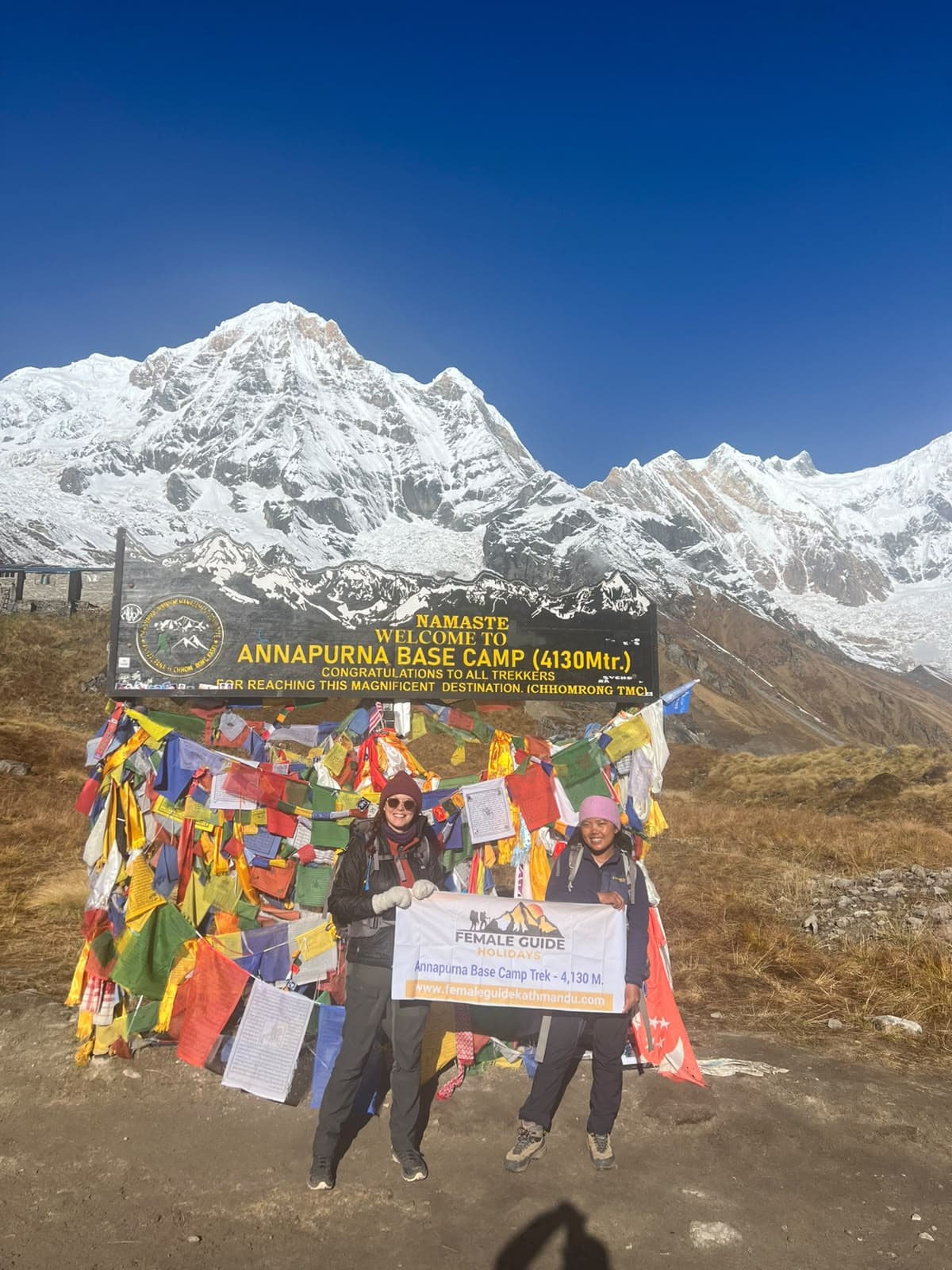
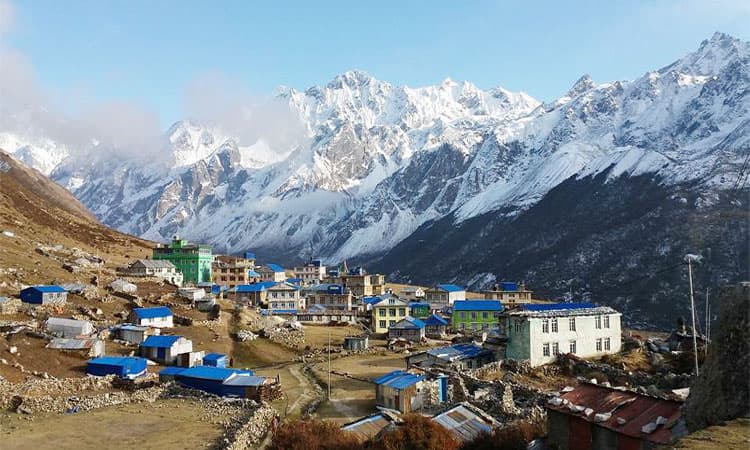
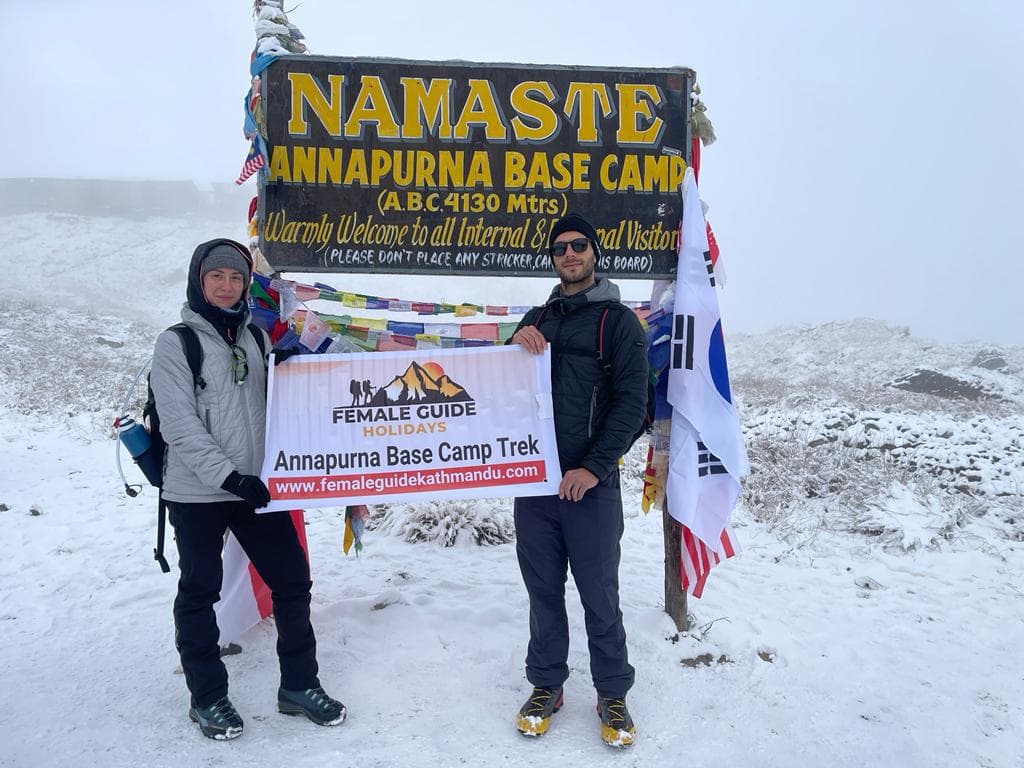
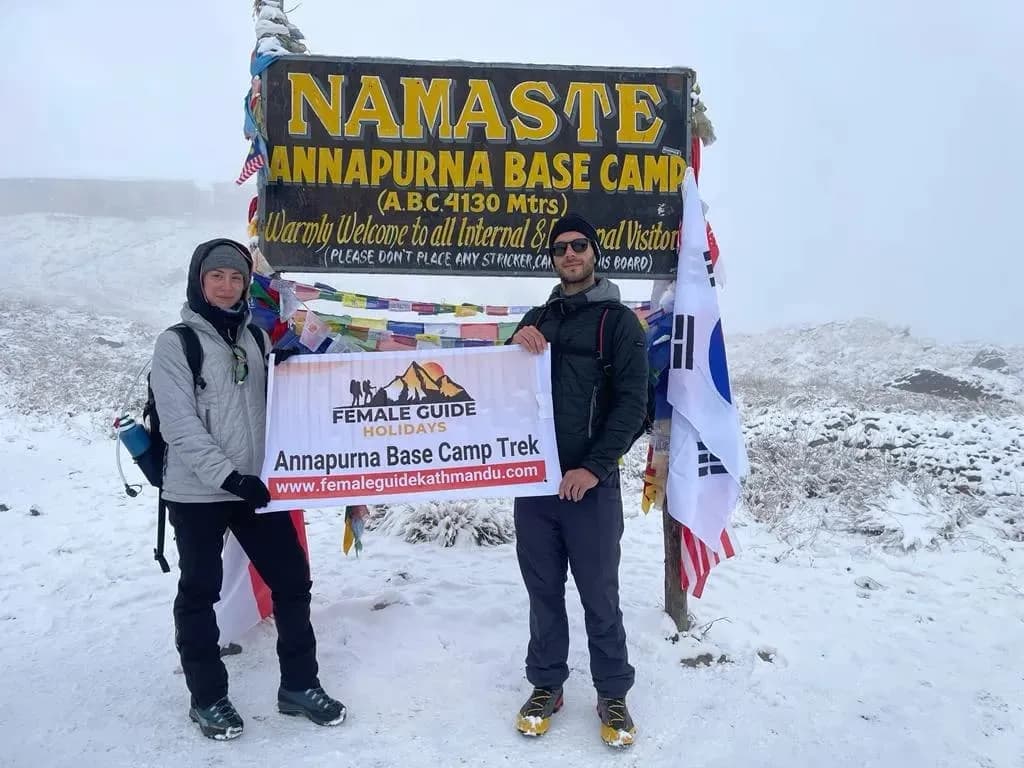
The Annapurna Sanctuary Trek is a spectacular 13-day Himalayan adventure that takes you through traditional mountain villages, lush forests, terraced farmlands, deep river valleys, and dramatic glacial landscapes to the heart of the Annapurna range. The journey leads to Annapurna Base Camp (4,130 m / 13,550 ft), a natural mountain amphitheater surrounded by towering Himalayan peaks, including Annapurna I, Annapurna South, Hiunchuli, and Machhapuchhre (Fishtail).
This trek combines extraordinary mountain scenery with the rich cultural heritage of Nepal's Gurung and Magar communities. Along the trail, you will pass traditional stone houses, hillside farms, rhododendron forests, cascading waterfalls, and suspension bridges crossing fast-flowing mountain rivers. The changing landscapes make the Annapurna Sanctuary Trek an excellent choice for trekkers seeking a rewarding Himalayan experience within a relatively short period.
The adventure usually begins with a drive from Pokhara to the trailhead near Nayapul or another designated starting point, depending on current road conditions and the itinerary. The trail gradually enters the Annapurna Conservation Area, climbing through traditional settlements and forested hillsides toward Ghorepani and the famous Poon Hill viewpoint. An early-morning hike to Poon Hill offers panoramic views of the Annapurna and Dhaulagiri mountain ranges, particularly beautiful at sunrise.
Continuing through Deurali, Machhapuchhre Base Camp, and the glacial valley, you eventually reach Annapurna Base Camp, where immense snow-covered peaks rise dramatically above the sanctuary. The return journey follows familiar mountain trails through bamboo forests and villages, with an opportunity to relax in the natural hot springs at Jhinu Danda, subject to accessibility and local conditions.
The Annapurna Sanctuary Trek is ideal for travelers who want to experience Nepal's Himalayan landscapes, local culture, mountain hospitality, and the thrill of reaching a famous base camp without undertaking a technical mountaineering expedition. A good level of fitness, preparation for long walking days, and awareness of altitude are important for enjoying this memorable journey.
Best Time to Visit
The best time for the Annapurna Sanctuary Trek is spring (March to May) and autumn (September to November). These seasons generally offer favorable trekking conditions, beautiful mountain views, and comfortable daytime temperatures, although weather can change quickly in the Himalayas.
Spring (March–May)
Spring is one of the most popular seasons for the Annapurna Sanctuary Trek. The lower hills become colorful with blooming rhododendrons and other wildflowers, while the higher trails offer impressive views of snow-covered peaks. Temperatures gradually rise, making daytime trekking more comfortable. Occasional rain, clouds, and late-season snow are possible.
Autumn (September–November)
Autumn generally provides some of the clearest mountain views after the monsoon. The trails pass through green landscapes, and the stable weather often makes this an excellent season for reaching Annapurna Base Camp. October and November are particularly popular, so advance accommodation arrangements are advisable during busy periods.
Winter (December–February)
Winter offers quieter trails and beautiful snowy mountain scenery. However, temperatures at higher elevations can fall well below freezing, and heavy snowfall may temporarily block sections of the trail. Proper winter clothing, suitable equipment, and flexible planning are essential.
Monsoon (June–August)
The monsoon season brings heavy rainfall, cloudy mountain views, muddy paths, leeches in forested areas, and an increased risk of landslides. Trekking is still possible when conditions permit, but weather-related delays and route changes may occur.
Trek Difficulty
The Annapurna Sanctuary Trek is generally considered a moderate to moderately challenging trek. It is suitable for travelers with good general fitness and some preparation for multi-day hiking. Previous high-altitude trekking experience is helpful but not essential.
Trekkers typically walk for around 4–7 hours per day, depending on the route, altitude, trail conditions, and walking pace. Some days involve long uphill climbs and thousands of stone steps, particularly around the lower mountain villages. Higher sections can be cold, steep, and physically demanding.
The trek reaches 4,130 m / 13,550 ft at Annapurna Base Camp, where the risk of altitude-related illness increases. Walking at a steady pace, staying hydrated, allowing adequate acclimatization, and informing your guide about any symptoms are important.
No technical climbing skills are normally required, but trekkers should be prepared for uneven trails, changing weather, and basic mountain facilities.
Trek Altitude and Acclimatization
The highest point of the trek is Annapurna Base Camp at 4,130 m / 13,550 ft. As the trail gains elevation, oxygen availability decreases, and some trekkers may experience symptoms of acute mountain sickness (AMS).
Common symptoms include headaches, nausea, dizziness, unusual fatigue, and loss of appetite. It is important to maintain a manageable pace and avoid ascending further if symptoms develop.
Your itinerary should allow appropriate time for gradual altitude gain. Inform your guide immediately if you feel unwell. Severe or worsening symptoms require prompt descent and medical assessment; never continue ascending with suspected altitude sickness.
Annapurna Conservation Area Permit and Requirements
The Annapurna Sanctuary Trek passes through the Annapurna Conservation Area, a protected region known for its biodiversity, traditional settlements, forests, and Himalayan landscapes.
Foreign trekkers generally require an Annapurna Conservation Area Permit (ACAP). Permit requirements, documentation, and applicable fees should be confirmed before departure because regulations can change.
Depending on current Nepal trekking regulations, a licensed guide may be required for foreign trekkers on this route. Your trekking company can help arrange the necessary permits, guide services, and required documentation before the trek begins.
Carry your passport and relevant permit documents during the journey, as checks may take place along the trail.
Trekking Guide and Porter Services
A licensed trekking guide can help you navigate the route, understand local culture, manage daily trekking arrangements, and respond to changing trail or weather conditions. Guides can also help monitor your well-being at altitude and coordinate assistance when needed.
Hiring a porter allows you to walk with a lighter daypack while supporting local employment in mountain communities. Porter arrangements, baggage limits, and included services depend on your package.
For a safer and more comfortable experience, discuss your walking pace, fitness level, dietary needs, and any medical concerns with your trekking company before departure.
Accommodation
Accommodation is generally provided in local teahouses and mountain lodges along the trekking route. These establishments offer basic rooms, usually with twin beds, blankets, and shared bathroom facilities. Availability and comfort levels vary between villages.
Lower-elevation settlements may provide more facilities, while accommodation at Deurali, Machhapuchhre Base Camp, and Annapurna Base Camp is generally simpler because of the remote location and high altitude.
Private rooms, attached bathrooms, hot showers, and charging facilities may be limited at higher elevations, especially during peak trekking seasons. Room availability cannot always be guaranteed, so advance planning is recommended.
Meals and Drinking Water
Meals during the trek are available at teahouses along the route. Common options include dal bhat, rice, noodles, soup, potatoes, eggs, vegetables, porridge, pancakes, and other locally available dishes. Dal bhat is a popular choice because it provides a filling combination of carbohydrates and protein.
Carry sufficient drinking water and refill it at suitable stops. Treated, boiled, or properly filtered water is recommended. Avoid drinking untreated stream water, even when it looks clear.
Bring water purification tablets or a suitable filter if you plan to refill bottles along the trail. Limiting single-use plastic bottles also helps reduce waste in the Annapurna region.
Transportation
The journey generally begins and ends in Pokhara, a major tourist city in Nepal. Travelers can reach Pokhara from Kathmandu by road or domestic flight, depending on their itinerary.
From Pokhara, a vehicle takes you to the designated trekking trailhead, which may vary according to road access and current conditions. The return journey involves trekking back to the roadhead before driving to Pokhara.
Road conditions, travel times, and the exact starting and ending points may change because of road construction, weather, and local transport arrangements. Your final itinerary should confirm the transportation included in your package.
Wi-Fi and Electricity
Wi-Fi and electricity are available at many teahouses, but the quality and reliability vary by location. Connectivity may become slower or less reliable as you approach higher elevations and Annapurna Base Camp.
Some lodges charge an additional fee for Wi-Fi, battery charging, or hot showers. Solar power and limited electricity supplies may affect availability during cloudy weather or periods of high demand.
A power bank and suitable charging cables are recommended. If you need reliable internet access for work or communication, prepare for periods without a stable connection.
Mobile Network and SIM Cards
Mobile network coverage varies throughout the Annapurna region. Nepalese SIM cards may work in several villages, but signal strength can be weak or unavailable in remote valleys and higher-altitude locations.
You can purchase a local SIM card in Kathmandu or Pokhara using the required identification documents. Check the available data packages before departure and download offline maps and essential travel information in advance.
Do not rely entirely on mobile connectivity for navigation, emergency communication, or weather updates.
Photography Restrictions and Permissions
The Annapurna Sanctuary Trek offers excellent photography opportunities, including mountain panoramas, traditional villages, forests, suspension bridges, and sunrise views from Poon Hill.
Photography is generally permitted along the trekking route, but always respect local customs and ask permission before taking close-up photographs of residents, religious ceremonies, or private property.
Drone use may require permissions from relevant aviation authorities, conservation authorities, or other responsible bodies. Confirm the applicable regulations before bringing or operating a drone.
Travel Insurance
Travel insurance is strongly recommended for the Annapurna Sanctuary Trek. Your policy should specifically cover trekking at elevations up to at least 4,130 m / 13,550 ft, emergency medical treatment, and helicopter evacuation where available.
Read the policy carefully to confirm that high-altitude trekking and emergency evacuation are covered. Some policies exclude activities above specified elevations or require advance authorization for evacuation.
Carry your insurance details and emergency contact information throughout the trek. Helicopter rescue depends on weather, visibility, location, and operational availability.
Passport and Visa Requirements
All international travelers joining the Annapurna Sanctuary Trek must ensure they have the appropriate travel documents for entry into Nepal. Most foreign visitors require a valid passport and a Nepal tourist visa, while Indian nationals do not require a visa to enter Nepal. Travelers should check the latest entry requirements based on their nationality before departure.
Your passport should generally be valid for at least six months from your arrival date in Nepal. Visitors eligible for a visa on arrival can obtain one at designated entry points, including Tribhuvan International Airport in Kathmandu. Some nationalities must obtain a visa in advance.
Travelers are responsible for arranging their own passports, visas, and international travel documents. Female Guide Holiday Pvt. Ltd. can provide general guidance on the documents needed for the trek, but visa approval and entry decisions remain the responsibility of the relevant authorities.
Baggage and Luggage Storage
During the Annapurna Sanctuary Trek, your main trekking luggage can be carried by porters if porter services are included in your package. You should carry a comfortable daypack containing essential items such as drinking water, snacks, sunscreen, a rain jacket, warm clothing, personal medication, and valuables.
If you have luggage that you do not need during the trek, you can usually store it at your hotel in Kathmandu or Pokhara, subject to the hotel's storage facilities and policies. This allows you to trek with only the belongings required for the journey.
Pack your trekking gear in a suitable duffel bag or soft-sided bag, according to your trekking company's instructions. Keep your passport, money, electronic devices, medication, valuables, and essential travel documents in your daypack.
If porter services are included, confirm the luggage weight limit and porter arrangements with Female Guide Holiday Pvt. Ltd. before departure. Packing light makes the trek more comfortable and helps ensure that baggage can be transported safely.
Altitude Sickness and Safety
Annapurna Base Camp is located at approximately 4,130 m (13,550 ft), where reduced oxygen availability increases the risk of altitude sickness. Altitude-related illness can affect anyone, regardless of age, fitness level, or previous trekking experience.
Common symptoms include headache, nausea, dizziness, unusual fatigue, loss of appetite, and difficulty sleeping. Inform your trekking guide immediately if you experience any of these symptoms, particularly if they persist or worsen.
To reduce altitude-related risks:
- Walk at a steady pace and avoid rushing to higher elevations.
- Drink fluids regularly and eat sufficient meals throughout the trek.
- Follow the planned itinerary and your guide's safety instructions.
- Do not ascend further if you develop symptoms of altitude sickness.
- Descend promptly if symptoms worsen or serious warning signs appear.
- Seek urgent medical assistance for severe breathlessness at rest, confusion, loss of coordination, or other serious symptoms.
Your trekking guide can help monitor your condition and coordinate assistance when necessary. The itinerary may need to change if weather, trail conditions, or health concerns affect your safety.
Female Guide Holiday Pvt. Ltd. strongly recommends comprehensive travel insurance covering trekking at elevations of at least 4,130 m (13,550 ft), emergency medical treatment, and helicopter evacuation where available. Always check the policy's specific altitude limits and evacuation conditions before travelling.
Responsible Trekking and Environmental Protection
The Annapurna Sanctuary Trek passes through the Annapurna Conservation Area, a protected region known for its diverse ecosystems, rhododendron forests, mountain landscapes, wildlife, and traditional Himalayan communities. Responsible trekking helps preserve this natural and cultural heritage for future generations.
Trekkers are encouraged to carry reusable water bottles, reduce single-use plastics, dispose of waste responsibly, and follow local conservation regulations. Stay on established trails, avoid disturbing wildlife, and never remove plants, rocks, or other natural materials from protected areas.
Respect local customs, religious traditions, and community practices throughout the journey. Ask permission before photographing residents, dress appropriately when visiting religious sites, and be considerate of local homes and cultural spaces.
Supporting local teahouses, restaurants, and businesses helps contribute to the livelihoods of mountain communities. Use water and electricity responsibly, minimize unnecessary waste, and follow your guide's advice regarding environmental protection.
Female Guide Holiday Pvt. Ltd. promotes responsible tourism by encouraging travelers to respect local communities, protect the Himalayan environment, and follow sustainable trekking practices throughout the Annapurna Sanctuary Trek.
Tipping for Guides and Porters
Tipping is customary in Nepal's trekking industry, although it is voluntary and should reflect your satisfaction with the service provided. It is a way to appreciate the hard work, local knowledge, and support of your trekking guide and porter throughout the Annapurna Sanctuary Trek.
When deciding how much to tip, consider the length of the trek, group size, quality of service, and the responsibilities of each team member. You may contribute individually or organize a group tip at the end of the journey.
Tips are not included in the standard trekking package unless specifically stated. Carrying Nepalese rupees in cash is recommended, as digital payment facilities may not be available in remote mountain villages.
Female Guide Holiday Pvt. Ltd. encourages fair and respectful treatment of trekking staff. Tipping remains entirely at your discretion, and no fixed amount is mandatory.
Personal Expenses During the Trek
Although the Annapurna Sanctuary Trek package may include accommodation, meals, permits, guide services, and transportation, certain personal expenses are generally excluded. The exact inclusions and exclusions depend on your selected package.
Additional personal expenses may include:
- Snacks, chocolates, soft drinks, bottled drinks, and extra beverages.
- Hot showers, Wi-Fi, device charging, and laundry services at teahouses.
- Personal trekking equipment, clothing, and gear rental.
- Travel insurance, medical treatment, and emergency evacuation expenses not covered by insurance.
- Tips for trekking guides, porters, and other service staff.
- Extra accommodation and meals resulting from delays or itinerary changes.
- Additional transportation, sightseeing tours, and optional activities.
- International flights, Nepal visa fees, and personal travel expenses, unless specifically included.
- Costs arising from services not listed in the confirmed package inclusions.
Carry sufficient Nepalese rupees for small purchases and services along the trail, as ATMs and card payment facilities are limited or unavailable in many trekking villages.
Review your package details before departure so you understand which services are covered and can budget appropriately for additional expenses.
Weather Delays and Itinerary Changes
Weather conditions, road closures, trail damage, illness, natural disasters, and transportation disruptions may affect the Annapurna Sanctuary Trek. Heavy rainfall, landslides, snowfall, avalanches, or other unexpected events can cause delays or require changes to the planned itinerary.
Female Guide Holiday Pvt. Ltd. prioritizes the safety and well-being of all participants. When necessary, the trekking guide and operations team may adjust the walking schedule, route, accommodation, or transportation arrangements according to local conditions and professional safety assessments.
Participants should maintain flexibility in their travel plans, particularly when connecting with domestic and international flights. Additional accommodation, meals, transportation, or other expenses arising from unexpected delays may involve extra costs, depending on the circumstances, recoverable supplier payments, and the confirmed booking terms.
Female Guide Holiday will make reasonable efforts to communicate changes promptly and arrange practical alternatives where possible. We strongly recommend comprehensive travel insurance covering trip interruption, medical emergencies, and high-altitude trekking.
Booking the Annapurna Sanctuary Trek
Booking the Annapurna Sanctuary Trek with Female Guide Holiday Pvt. Ltd. is straightforward. Travelers can contact our team to confirm their preferred departure dates, group size, accommodation preferences, transportation arrangements, and any special requirements.
Before confirming your reservation, review the 13-day itinerary, package inclusions and exclusions, cancellation policy, payment terms, and relevant trekking requirements. Please inform us in advance of any dietary requirements, accessibility needs, or other considerations that may affect your trekking experience.
Early booking is recommended during the popular spring and autumn trekking seasons, when accommodation, domestic flights, and transportation services may be in high demand. Last-minute bookings may also be possible, subject to availability and sufficient time to arrange the necessary services.
Your booking will be confirmed once the required payment has been received and Female Guide Holiday has confirmed the availability of the relevant services.
Our team will provide the necessary trip information and preparation guidance to help you get ready for your Himalayan adventure. From arranging an experienced trekking guide to coordinating accommodation, permits, and transportation, we aim to make your Annapurna Sanctuary Trek comfortable, well-organized, and memorable.
Cancellation Policy
Female Guide Holiday Pvt. Ltd. understands that travel plans can change unexpectedly. Our cancellation policy outlines the applicable charges for cancellations of confirmed trekking bookings. These charges help cover advance payments, accommodation reservations, transportation arrangements, permits, guide services, and other expenses committed on behalf of participants.
Unless a separate written agreement applies, the following cancellation charges are calculated based on the total trip cost:
- 45–60 days before departure: 35% cancellation charge.
- 30–44 days before departure: 50% cancellation charge.
- 15–29 days before departure: 70% cancellation charge.
- 7–14 days before departure: 85% cancellation charge.
- Less than 7 days before departure: 100% cancellation charge.
The applicable cancellation period is calculated using the scheduled departure date. Any non-refundable third-party expenses, including issued flight tickets, permits, or supplier charges, may also be subject to the relevant booking terms.
Participants should submit cancellation requests in writing by email to ensure the request and its date are documented. Any eligible refund will be processed after the applicable charges and outstanding costs have been deducted.
Cancellation by Participant
If a participant needs to cancel the Annapurna Sanctuary Trek, they must notify Female Guide Holiday Pvt. Ltd. in writing as soon as possible. The cancellation policy will apply according to the number of days remaining before the scheduled departure.
Refunds, where applicable, will be calculated after deducting the relevant cancellation charges and any non-refundable costs already incurred. Visa fees, travel insurance premiums, issued flight tickets, and other third-party payments may not be refundable, depending on the provider's terms.
If a participant leaves the trek early, misses scheduled activities, arrives late, or decides not to continue for personal reasons, unused services are generally non-refundable.
Participants are strongly encouraged to purchase comprehensive travel insurance that covers trip cancellation, interruption, medical emergencies, and high-altitude trekking where applicable.
Cancellation by Female Guide Holiday
Female Guide Holiday Pvt. Ltd. makes every reasonable effort to operate the Annapurna Sanctuary Trek as confirmed. However, the company reserves the right to cancel or modify a trip if circumstances make the planned arrangements unsafe or impractical.
Possible reasons include insufficient bookings for a guaranteed group departure, serious safety concerns, natural disasters, significant trail closures, government restrictions, or other circumstances beyond the company's reasonable control.
Where Female Guide Holiday cancels a trip before departure for reasons within its control, the company will communicate the available options, which may include an alternative departure date, a suitable replacement itinerary, or a refund for the services not provided, subject to the booking agreement and applicable law.
If cancellation or disruption results from circumstances beyond the company's reasonable control, the available refund or alternative arrangements will depend on recoverable supplier payments, non-refundable expenses, and the circumstances involved.
Female Guide Holiday will make reasonable efforts to help affected participants find practical alternatives and minimize disruption.
Force Majeure Clause
Force majeure refers to exceptional circumstances beyond the reasonable control of Female Guide Holiday Pvt. Ltd. that prevent or significantly disrupt the operation of the Annapurna Sanctuary Trek.
Such circumstances may include earthquakes, landslides, floods, severe snowfall, avalanches, extreme weather, public health emergencies, political unrest, government restrictions, road blockages, airport closures, and other unforeseen events that affect travel safety or accessibility.
If a force majeure event occurs, the company may need to delay, modify, reroute, suspend, or cancel the trek to protect participants and staff.
Female Guide Holiday will communicate significant changes as soon as reasonably possible and explore practical alternatives where feasible. Additional costs resulting from changes, including extra accommodation, transportation, or extended stays, will be explained to participants and handled in accordance with the booking agreement and applicable law.
Refunds for disrupted services will depend on payments recoverable from suppliers, services already delivered, and non-refundable expenses. The company will make reasonable efforts to recover eligible amounts but cannot guarantee refunds from independent third-party providers.
Participants are advised to obtain comprehensive travel insurance covering relevant disruptions, medical emergencies, and evacuation expenses.
Refunds and Unused Services
If the Annapurna Sanctuary Trek – 13 Days is interrupted, postponed, or cancelled due to a force majeure event or other unforeseen circumstances, any refund will depend on recoverable payments from hotels, airlines, transportation companies, teahouses, guides, porters, permit authorities, and other service providers, as well as non-refundable expenses already incurred and the applicable booking terms.
Female Guide Holiday Pvt. Ltd. will make reasonable efforts to recover eligible payments and assist participants with alternative arrangements wherever possible. However, refunds for unused accommodation, meals, domestic flights, transportation, permits, or other services cannot be guaranteed when the costs have already been incurred or are non-refundable under the relevant supplier policies.
Any eligible refund will be calculated in accordance with the agreed booking terms and applicable law. Participants are encouraged to contact their travel insurance provider regarding eligible expenses arising from trip cancellation, interruption, emergency evacuation, additional accommodation, or transportation changes.
Female Guide Holiday Pvt. Ltd. is committed to transparent communication, responsible handling of unexpected situations, and prioritizing the safety and well-being of all participants throughout the Annapurna Sanctuary Trek – 13 Days.
Private and Group Bookings
Female Guide Holiday Pvt. Ltd. offers the Annapurna Sanctuary Trek for private travelers, couples, families, friends, and organized groups. Participants can choose an arrangement that best matches their preferred travel dates, budget, pace, and level of service.
Private Trek: A private trek provides a more personalized experience, with greater flexibility in walking pace, rest stops, accommodation preferences, and daily arrangements where practical. The price depends on group size, guide and porter requirements, transportation, accommodation, and other selected services.
Group Trek: Group departures allow travelers to share the experience with other trekkers and may reduce the per-person cost by sharing certain expenses. Group sizes, departure dates, and minimum participant requirements will be confirmed during booking.
Both private and group bookings are subject to availability, weather conditions, trail access, and applicable trekking regulations. Participants should disclose relevant dietary requirements, medical concerns, and special requests before departure.
Last-Minute Booking
Female Guide Holiday Pvt. Ltd. may accept last-minute bookings for the Annapurna Sanctuary Trek, subject to availability and sufficient time to arrange the required services.
Travelers booking shortly before departure should provide their passport details and other requested documents promptly so the company can coordinate permits, guide services, accommodation, and transportation. Availability may be limited during the busy spring and autumn trekking seasons.
Last-minute bookings may involve additional charges for urgent transportation arrangements, limited accommodation availability, or changes to standard services. Payment must be completed according to the confirmed booking terms before departure.
Participants should not assume that a trek can be confirmed until the company has verified the availability of the required services. Booking well in advance is recommended, especially for fixed travel dates and peak-season departures.
Pokhara Flight and Alternative Transportation Options
Pokhara is the main gateway for the Annapurna Sanctuary Trek. Travelers can reach Pokhara from Kathmandu by domestic flight or road transportation before continuing to the trekking trailhead.
Domestic Flight: A flight from Kathmandu to Pokhara takes approximately 25–30 minutes under normal operating conditions. Flying is a convenient option for travelers who want to reduce road travel time. Flights may be delayed or canceled because of weather, visibility, operational issues, or other factors. Travelers should allow sufficient flexibility in their itinerary.
Tourist Bus: Tourist buses operate between Kathmandu and Pokhara. The journey commonly takes around 6–8 hours, although traffic, road construction, weather, and road conditions can extend travel time.
Private Vehicle: A private car, jeep, or other suitable vehicle offers greater flexibility for departure times, comfort, and stops along the way. Travel duration depends on traffic and road conditions.
After reaching Pokhara, the trekking team will arrange transportation to the designated trailhead according to the confirmed itinerary. The starting point may vary depending on current road access and trail conditions.
Flight tickets, road transfers, and other transportation services are included only when explicitly stated in the booking confirmation. Travelers connecting to international flights should allow sufficient buffer time because domestic flights and road journeys can be affected by unexpected delays.
Annapurna Sanctuary Trek – A Memorable Himalayan Experience
The Annapurna Sanctuary Trek offers an exceptional opportunity to explore Nepal's mountain landscapes, traditional villages, and rich Himalayan culture while reaching the spectacular Annapurna Base Camp. From the sunrise panorama at Poon Hill to the towering peaks surrounding the sanctuary, each stage of the journey brings a different perspective on the Annapurna region.
With proper preparation, suitable equipment, a responsible trekking team, and a flexible approach to mountain conditions, this 13-day adventure can become a rewarding experience for trekkers seeking both natural beauty and cultural discovery in the Nepalese Himalayas.