
Menu

24/7 Support
Need help? We are at your service
- 977 9843197098
- [email protected]
- Thamel, Kathmandu, Nepal
Useful links

We are affiliated with:


We are reccommended in:


We accept:

Menu
24/7 Support
Need help? We are at your service
Useful links
We are affiliated with:
We are reccommended in:
We accept:
Duration
16 Days
Group Size
Min. 1 Pax
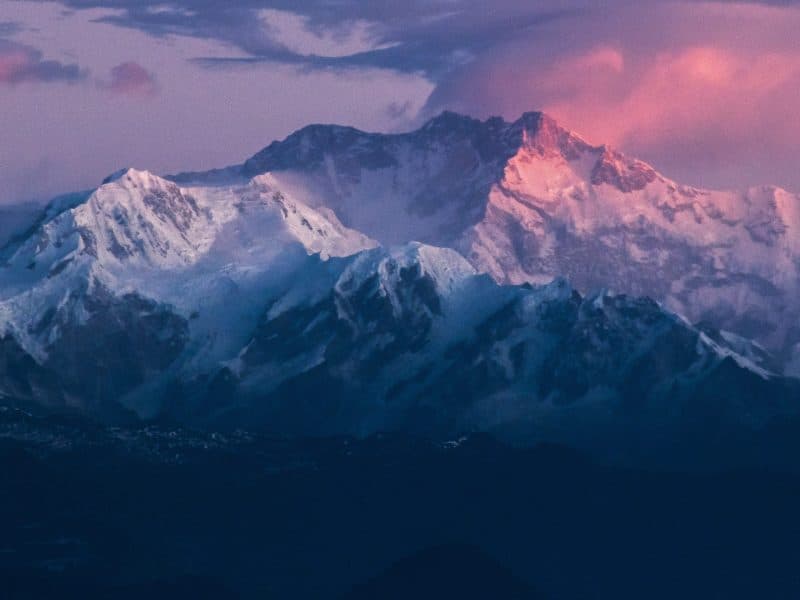
Kanchenjunga North Base Camp Trek: The Kanchenjunga Himal, located on the Nepal-India border, is the third-highest mountain in the world, surrounded by the Tamur River to the west, Lhonak Chu and Jongsang La to the north, and the Teesta River to the east. This region features 16 peaks that rise above 7,000 meters (23,000 feet). Kanchenjunga, meaning “The Five Treasures of the High Snow,” is a hidden gem with a diverse range of ecosystems, from savannas and grasslands to alpine shrubs and meadows. The region also boasts rich biodiversity and varying microclimates.
This trek offers an unforgettable journey through one of the most remote areas of Nepal, allowing you to explore, discover, and immerse yourself in nature while encountering new cultures and people.
Kanchenjunga, regarded as one of the world’s most stunning mountains, is considered the dwelling place of deities. It sits in a sparsely populated, untouched wilderness in the heart of the Kanchenjunga Conservation Area. This region is home to rare wildlife such as the red panda and the elusive snow leopard, known as the “Ghost of the Mountain.”
The trek takes you through secluded hillside villages, dense rainforests, alpine meadows, glacier paths, and moraine fields, leading to the base of the third-highest mountain in the world. With every step, you witness the raw beauty of the landscape. This trek is physically demanding, so excellent physical and mental fitness is required, as you’ll be gaining 400-800 meters in elevation each day.
The journey begins with a scenic flight from Kathmandu to Bhadrapur, followed by a drive to Taplejung. The drive takes you through the Terai plains and into the Churia hills. From Taplejung, the trekking adventure starts as you make your way toward the village of Sinuwa, followed by the forested paths leading to Chirwa.
As you follow the rivers and venture into the wilderness, you’ll reach Ghunsa Khola Valley and then the village of Sakathum. From here, you continue to the Tibetan village of Amjilosa. After crossing forests of rhododendron and bamboo, you’ll arrive at Gyable, a small settlement. The trail then takes you through large alpine meadows and across remote villages until you reach Gunsa, a large Tibetan village in the Kanchenjunga Conservation Area. After taking a day to acclimatize and explore Gunsa, the journey continues to Kambachen.
Passing through glacier moraines and rugged slopes, you follow the northern route along the Kanchenjunga Glacier to the village of Lhonak. Here, you’ll enjoy stunning views of peaks like Wedge, Mera, Nepal, and Twins. As you traverse the ridges of the Lhonak Glacier, you’ll finally reach Kanchenjunga Base Camp, where breathtaking panoramic views of Kanchenjunga, Janu Himal, Everest, Makalu, and other towering peaks and glaciers await.
On the descent, you’ll retrace your steps through the wilderness, stopping at Ghunsa and Amjilosa before returning to Sakathum. From there, you’ll drive back to Taplejung, catch a flight from Bhadrapur to Kathmandu, and complete your trek.
The Kanchenjunga North Base Camp Trek offers unparalleled beauty, from sweeping landscapes to the warmth of the local people. Experience the adventure of a lifetime with Female Guide Holiday Pvt. Ltd.
To trek in the Kanchenjunga region, the following permits are required:
Kanchenjunga Trek Permit Costs:
Kanchenjunga Conservation Area Project (KCAP) Entry Permit: NPR 2,000 per person, with no time restrictions on the permit.
Kanchenjunga Restricted Area Permit (RAP): USD 10 per person, per week.
This permit must be issued by a registered local travel agency in Nepal, and a minimum of two trekkers is required to obtain it.
You will need the following documents:
In Kathmandu, you will stay in 3-star hotels. During the trek, accommodation will be in basic lodges or teahouses. In some remote areas, makeshift camps will be used for overnight stays.
In the Kanchenjunga Trek, you’ll have the chance to enjoy a variety of Nepali and Tibetan cuisines. The trail is dotted with small teahouses operated by local residents, offering basic meals and minimal facilities.
Natural water sources are available throughout the trek from taps and streams. However, as these water supplies are untreated, it’s not recommended to drink directly from them. You can refill bottles with boiled or filtered water from the teahouses along the trail.
For additional safety and convenience, consider carrying water purification tablets, chlorine drops, or using SODIS (solar water disinfection). This not only ensures safe drinking water but also helps reduce plastic waste along the route.
The ideal seasons for trekking in the Kanchenjunga region are autumn and spring.
Autumn (September, October, November): This is one of the best times for trekking. The skies are clear, offering breathtaking views of the surrounding mountain ranges. The forests are lush, and the temperatures are warm during the day with cooler nights—perfect for stargazing.
Spring (March, April, May): As winter ends, the region comes alive with colorful blooms in the sub-alpine forests and green pastures. The weather is mild, and clear skies offer excellent visibility. You’ll also witness herds of sheep and yaks grazing in the highlands during this season.
Monsoon (June, July, August): This season is generally avoided by trekkers due to heavy rain, landslides, and challenging travel conditions.
Winter (December, January, February): The Kanchenjunga region experiences heavy snowfall in winter, making trekking difficult and sometimes impossible as many trails become blocked.
Female Guide Holiday Pvt. Ltd. recommends visiting during spring or autumn for the best trekking experience.
It is mandatory for all clients participating in our treks to have comprehensive travel insurance. This should cover personal injury, medical expenses, emergency evacuation (including helicopter rescue), and repatriation in case of accidents, illness, or other unforeseen circumstances. We strongly recommend purchasing insurance from a reputable provider to ensure you are fully protected during your trek in Nepal.
To enter Nepal, all travelers must have a valid passport with at least six months remaining from the date of return. Visas can be obtained through the Nepalese consulate in your home country or upon arrival at Tribhuvan International Airport in Kathmandu.
Your safety is of paramount importance to us at the Female Guide Holiday. We have the absolute authority to cancel the trip or change the itinerary, when deemed necessary or when we have reason to believe your safety is at stake. Weather conditions, the health condition of a group member, natural disasters, and such, can contribute to changes in the itinerary when traveling in remote mountainous regions. In these extreme situations, we kindly request that you offer your full cooperation to the trusted leader of the group appointed by the Female Guide Holiday. However, we assure you that we will make every effort to keep to the above itinerary.
Discover the foothills of Kanchenjunga, the third-highest peak in the world.
Journey through diverse landscapes and unique microclimates.
Trek along remote and untouched trails.
Explore traditional monasteries and Gompas in the region.
Immerse yourself in the rich culture and ancient traditions of the local communities.
Enjoy unparalleled panoramic views of the majestic Himalayan range.
All airport/hotel transfers by private car/van
1-night accommodation in Kathmandu (3-star, twin sharing) including breakfast
14 night’s accommodation in lodges/guesthouses during the trek
Experienced English-speaking trekking guide and porter during the trek
Guide and porter’s salary, meals, insurance, and accommodation
Breakfast, lunch, dinner, and tea/coffee during the trek
Welcome and farewell meals, along with breakfasts while in Kathmandu
Kanchenjunga National Park Permit and TIMS (Trekkers' Information Management System) card
Round-trip airfare from Kathmandu to Bhadrapur and back, including domestic flight departure taxes
Transportation from Bhadrapur to Suketar by shared car/jeep
Private car from Taplejung to Bhadrapur
Complimentary Female Guide Holiday kit bag and T-shirt
Down jacket and sleeping bag (to be returned after trek completion)
Driver’s salary, meals, and accommodation
Fuel, road taxes, and parking fees for transportation
Ncell SIM card (Nepalese SIM card with 30 GB data pack) – one per group
Price: 1399
$1099 USD/pp
Price Per Person
USD 2899 USD 2999

 3% Off
Kanchenjunga Region, Nepal
Difficulty:
Duration
16 Days
Max. Altitude
0 Reviews
Price Starting From
US$ 2899 2999 /person
Kanchenjunga Region, Nepal
Difficulty:
Moderate
Duration
28 Days
 2% Off
Kanchenjunga Region, Nepal
Difficulty:
Max. Altitude
0 Reviews
Price Starting From
US$ 3599 /person
Duration
21 Days
Max. Altitude
0 Reviews
Price Starting From
US$ 3899 3999 /person
